What New Buyers Need to Know About Heating Systems in York's Older Homes

Inheriting a Historic Home's HVAC: The Fall Challenge for New Buyers
Over 50% of homes in Pennsylvania were built before 1970, which means if you are researching what new buyers need to know about heating systems in York's older homes, you are likely facing a unique set of challenges. You have just taken ownership of a beautiful, character-filled property, but you have also inherited its legacy heating infrastructure. Navigating an unfamiliar, mixed-era heating system can feel overwhelming, especially as the September pre-heating-season begins to signal the impending drop in temperatures.
The immediate decision point for most new buyers is figuring out how to safely evaluate and test this unfamiliar equipment before the first fall cold snap hits York. Standard modern HVAC checklists simply do not apply to these unique properties. A newly built suburban home might have a straightforward, unified system, but older homes often feature a patchwork of upgrades, retrofits, and abandoned components that require a cautious, knowledgeable approach.
Establishing a safe baseline for your inherited system is critical. Rather than guessing how your specific setup operates, it is always best to rely on professional heating services to evaluate the equipment. Whether you are dealing with aging radiators or need comprehensive gas and propane furnace services to ensure your retrofitted system is safe, bringing in a local professional during the early fall provides the clarity you need to operate your system confidently.
The Reality of Mixed-Era Heating Infrastructure in York
York PA historic properties boast a rich architectural history, featuring a stunning blend of Victorian, Colonial, and mid-century designs. While these homes offer unmatched charm, their heating systems are rarely straightforward. Over the decades, these properties have typically undergone multiple heating system iterations. A home built in 1910 may have started with coal, transitioned to an oil boiler in the 1950s, and eventually received a retrofitted gas furnace in the 1990s.
It is incredibly common to find a mix of original radiant heat components alongside newer forced-air additions. You might walk into your basement and see heavy cast-iron pipes running parallel to modern sheet metal ductwork. This patchwork approach means that different parts of your home may heat at different rates, and the system as a whole requires specialized knowledge to operate and maintain safely.
• Infrastructure — Modern Construction HVAC: Unified system designed alongside the home's framing. — Historic Property Mixed-Era HVAC: Patchwork of retrofits squeezed into existing, older spaces.
• Airflow & Ductwork — Modern Construction HVAC: Optimized static pressure with sealed, sized ducts. — Historic Property Mixed-Era HVAC: Drafty architecture paired with modified or undersized legacy ducts.
• Fuel Sources — Modern Construction HVAC: Single, clearly marked modern fuel line (gas or electric). — Historic Property Mixed-Era HVAC: Multiple generations of fuel lines, sometimes including inactive oil tanks.
• Maintenance Needs — Modern Construction HVAC: Standard annual tune-ups based on manufacturer specs. — Historic Property Mixed-Era HVAC: Customized professional evaluations to ensure mixed components operate safely together.
Why Standard Maintenance Advice Falls Short
Generic HVAC advice online usually assumes you are dealing with a modern, unified system. They suggest simply changing a filter and turning on the thermostat. However, when mismatched eras of equipment are forced to work together, you face unique airflow and efficiency challenges. A high-efficiency furnace connected to 80-year-old ductwork may short-cycle because the old vents cannot handle the modern blower's air volume. Understanding this reality is the first step in protecting your investment and ensuring your family's comfort.
Identifying Your System: From Oil Boilers to Retrofitted Furnaces
Before you can properly prepare for winter, you need to accurately identify the type of system you have inherited. Mixed-era retrofitted furnaces and aging boilers each have distinct maintenance requirements. Knowing what you are dealing with helps you communicate effectively when you eventually schedule a professional inspection.
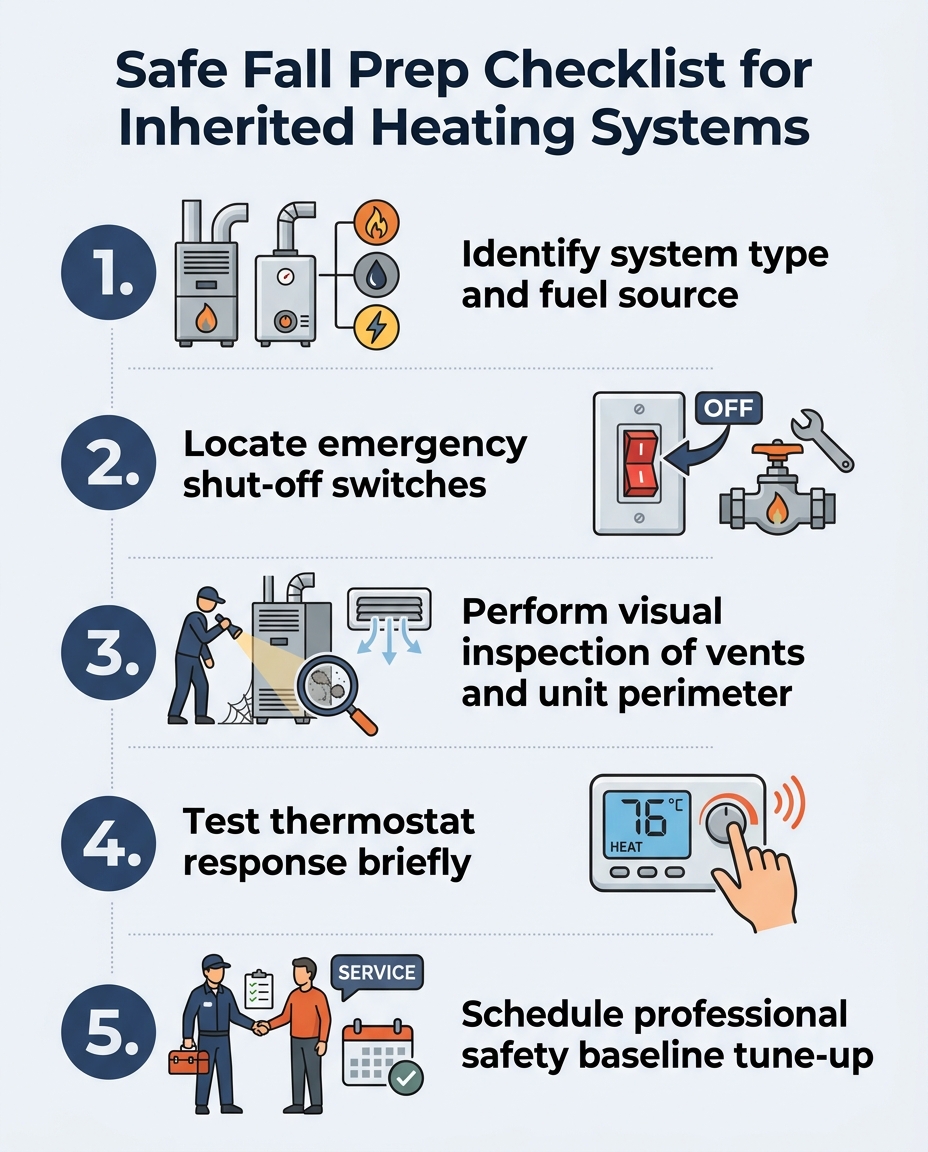
1. Identify the primary heat source: Look for the main unit in your basement or utility room. Older oil boilers are typically large, heavy, cast-iron units connected to a network of pipes leading to radiators or baseboards. If you have a boiler, you will need specialized oil furnace and boiler services to ensure it is operating safely.
2. Examine the ductwork (or lack thereof): Retrofitted forced-air furnaces are often squeezed into tight basement corners, with metal ductwork branching out across the ceiling. Notice if the ducts look newly installed or if they appear to be older, modified metal that has been taped or sealed over the years.
3. Locate the fuel source: Determine whether your system runs on natural gas, propane, heating oil, or electricity. Look for gas meters, propane lines, or an oil tank. In some historic homes, you may even find abandoned oil tanks from previous decades—make sure you know which lines are active.
4. Find the emergency shut-offs: Locate the electrical breaker that controls your heating system, as well as any physical emergency switch (often a red switch located at the top of the basement stairs or near the unit itself). Additionally, find the gas or oil shut-off valve near the equipment.
Locating Key Components in Older Basements
Navigating a cramped, stone-walled basement requires care. Bring a strong flashlight and look for visible signs of past retrofitting. You might see modified ductwork transitions where a newer, smaller furnace was connected to a massive, older plenum. Documenting these quirks helps you understand the physical limitations of your inherited system.
Safe Baseline September Checks for Unfamiliar Systems
As the September pre-heating-season arrives, there are a few safe, non-technical steps you can take to establish a baseline for your inherited system. It is vital to delineate between visual checks you can do yourself and mechanical repairs that require a licensed professional. Never attempt to open sealed combustion chambers, adjust gas valves, or handle degraded wiring.
Your safe visual checklist includes:
• Clear the perimeter: Ensure there is at least three feet of clearance around your furnace or boiler. Previous owners may have stored boxes, paint, or cleaning supplies near the unit, creating a severe fire hazard.
• Inspect visible venting: Look at the exhaust flues and PVC pipes exiting the unit and the house. Ensure they are not crushed, disconnected, or blocked by fall debris, bird nests, or overgrown bushes outside.
• Check thermostat wiring: Visually inspect the wires connecting to your thermostat. If they look frayed or if the thermostat itself is an antique mercury model, make a note to have a professional upgrade it.
• Perform a brief response test: On a mild September day, turn the thermostat to "heat" and raise the temperature a few degrees above the room temperature. Listen for the system to click on. Let it run for just five to ten minutes to confirm it produces heat, then turn it off. Do not run an uninspected system for extended periods.
• Locate and replace the air filter: If you have a forced-air system, find the filter slot. Older homes often have non-standard filter sizes, so you may need to measure the slot carefully or check the existing dirty filter for dimensions before buying a replacement.

Recognizing Red Flags: When to Stop DIY and Call a Professional
While visual checks are helpful, mixed-era retrofitted furnaces carry unique risks that require strict safety boundaries. If you notice any warning signs during your brief September test, turn the system off immediately at the thermostat and the emergency switch. Do not attempt to diagnose or fix the issue yourself.
Critical warning signs include:
• Unusual smells: A brief smell of burning dust is normal the first time a furnace turns on after summer. However, the smell of rotten eggs (gas), raw oil, melting plastic, or a burning odor that persists longer than ten minutes indicates a serious problem.
• Soot buildup: If you see black soot around the registers, near the furnace cabinet, or on top of a boiler, the system is not venting properly and could be leaking carbon monoxide.
• Unresponsive thermostats: If you turn the heat on and nothing happens, or if the system clicks repeatedly without igniting, the ignition system or safety sensors may be failing.
• Strange noises: Banging, booming, or heavy grinding sounds upon startup often point to delayed ignition or failing blower motors.
The dangers of DIY repairs on older gas lines, oil lines, or degraded electrical wiring cannot be overstated. An inherited system needs a professional safety baseline established before its first heavy winter load. Professional diagnostics can uncover hidden issues in older systems that visual checks completely miss, such as a cracked heat exchanger or a failing draft inducer.
The Importance of a Professional Safety Baseline
The first year in a historic home is the most critical time for a professional HVAC evaluation. You simply do not know the maintenance history of the equipment. A proper inspection prevents mid-winter emergencies and ensures safe operation. For example, when one local homeowner needed extensive furnace work that required a second day to finish, our technician arrived early for the appointments and returned the next morning to complete the job safely and promptly. Taking the time to do the job right is essential for older infrastructure. If you spot any red flags, reach out for professional residential HVAC services in York immediately.
Addressing Legacy Ductwork and Drafty Architecture Before the Freeze
A heating system does not operate in a vacuum; its performance is deeply connected to the physical realities of your home. York PA historic properties are known for their beautiful architecture, but they are also known for being drafty. When you combine uninsulated walls, original single-pane windows, and high ceilings, your heating system has to work significantly harder to maintain comfort.
Legacy ductwork adds another layer of complexity. Because central air and forced-air heating were often added decades after these homes were built, the ductwork had to be routed through existing chases, closets, and narrow joists. This often results in sharp turns, pinched ducts, and uneven airflow. If your furnace is making knocking sounds, it might be struggling against the high static pressure caused by these restrictive, older metal vents expanding and contracting.
With York's specific freezing fall temperatures and the mid-to-late October first freeze fast approaching, early draft mitigation and duct evaluation are critical. Taking basic weatherization steps complements your heating system's performance. Check the weatherstripping around your historic doors, apply temporary caulking or film to drafty windows, and ensure that heavy drapes are closed at night to trap heat. Reducing the heat loss of the building envelope takes immense pressure off your aging retrofitted furnace.
Your Historic Home Action Plan: Pre-Season Tune-Ups
The urgency of acting during the September pre-heating-season cannot be ignored. Waiting until November to test your inherited system means you risk discovering a major failure on a day when the temperature is dropping below freezing and HVAC schedules are completely booked.
A pre-season tune-up for a historic home entails much more than a standard filter change. A licensed professional will perform a combustion analysis to ensure the burners are operating safely and efficiently. They will test all safety switches to confirm the unit will shut down if a problem occurs. They will also inspect your retrofitted ductwork and legacy fuel lines for signs of wear, corrosion, or leaks.
We frequently see what happens when these proactive steps are skipped. One homeowner woke up to a cold house on a freezing Saturday morning, and while we managed to fit them into a full schedule to restore their heat, a proactive September check could have prevented the emergency entirely. Our team has extensive real-world local experience walking new York homeowners through their specific inherited, mixed-era systems. We know how to evaluate these quirky setups, and we can reassure you that with the right professional oversight, even older systems can be managed reliably.
Securing Peace of Mind Before the First York Freeze
Understanding an inherited heating system brings incredible peace of mind to new buyers. You do not have to be an HVAC expert, but you do need to know the basic layout of your equipment and the strict boundaries of safe DIY testing. Your ultimate goal for your first fall in a York PA historic property is to establish a professional safety baseline before the winter weather forces your system to run continuously.
If you are still researching what new buyers need to know about heating systems in York's older homes, the most important takeaway is to be proactive. Do not wait for the mid-to-late October freeze to test your equipment. Schedule a comprehensive evaluation of your older home's heating system today, so you can spend your first winter enjoying the historic charm of your new home in total comfort and safety.
Frequently Asked Questions
How do you test an old furnace before winter?
You test an old furnace by performing a brief, supervised operational check on a mild fall day. First, ensure the perimeter is clear of debris and visually inspect the vents and thermostat wires. Turn the thermostat to "heat" and raise the temperature a few degrees, allowing the system to run for five to ten minutes to confirm it produces warm air. If you hear strange noises, smell unusual odors, or the system fails to ignite, turn it off immediately and call a professional.
What is the best heating system for an older home?
The best heating system depends heavily on the home's existing infrastructure and ductwork capabilities. High-velocity mini-duct systems or ductless mini-split heat pumps are often excellent choices because they require minimal architectural disruption. However, if the home already has functional, retrofitted ductwork, upgrading to a modern high-efficiency gas furnace can also provide reliable comfort.
Can you put central heat in a 100-year-old house?
Yes, you can install central heat in a century-old house, but it requires careful planning to preserve the historic architecture. Installers often have to route ductwork through existing closets, under floorboards, or utilize high-velocity systems that use flexible, narrow tubing instead of bulky metal ducts. A professional evaluation is necessary to determine the least invasive and most efficient routing method for your specific property.
How do you heat a historic home safely?
Heating a historic home safely starts with a comprehensive professional inspection of all legacy equipment, fuel lines, and exhaust flues. You must ensure that retrofitted systems are venting properly to prevent carbon monoxide buildup and that older electrical wiring can handle the load of modern blowers. Supplementing the main system with proper weatherization, like sealing drafty windows, also helps the equipment run safely without overworking.
What should I do if my inherited furnace smells like burning dust when turned on?
A brief smell of burning dust is generally normal the very first time a furnace kicks on after sitting idle all summer, as it is simply burning off settled particles. However, this odor should dissipate within ten to fifteen minutes. If the smell persists, grows stronger, or changes to a plastic or metallic burning odor, shut the system off immediately at the thermostat and contact a licensed technician.
How often should a retrofitted furnace in an older home be inspected?
A retrofitted furnace in an older home must be inspected by a licensed professional at least once every year, ideally in the early fall before the heating season begins. Because these systems often involve mixed-era components working together, they are more susceptible to airflow imbalances and vibration wear. Annual professional tune-ups are critical for catching small issues before they turn into major mid-winter breakdowns.
Customer Testimonials
Focus on enhancing the quality of your maintenance plan by ensuring all components are well-coordinated and efficient. This will lead to improved performance and longevity of your systems.