MERV Ratings: Choose the Right HVAC Air Filter

MERV Ratings: Choose the Right HVAC Air Filter
At Advance HAWS, we work with homeowners in York, PA every day to make sure their HVAC systems run cleanly, efficiently, and reliably through every season. One of the most frequent questions our team hears is about air filters — specifically, what the numbers on the package actually mean and which one is right for a given home. MERV — Minimum Efficiency Reporting Value — is the industry-standard scale measuring how effectively an air filter traps airborne particles. Ratings run from 1 to 16 for residential systems, with higher numbers capturing smaller contaminants including pollen, pet dander, and bacteria. Our experienced team at Advance HAWS recommends matching the rating to your system's airflow requirements for balanced efficiency and air quality.
What Do You Need Before Buying a Filter?
Buying the right HVAC air filter starts with understanding what your system can actually handle. Air quality directly affects household health and comfort, making filter selection one of the most consequential home maintenance decisions a homeowner faces. Before walking into a hardware store or placing an online order, our team at Advance HAWS recommends gathering the following information.
- Locate your current filter. Find the existing filter in your furnace or air handler and note its physical dimensions — length, width, and thickness are all printed on the cardboard frame. Writing these measurements down before you shop prevents the most common purchasing mistake we see.
- Record the filter size exactly. Even a half-inch difference means the filter will not seat properly, allowing unfiltered air to bypass the media entirely. A poor fit defeats the purpose of upgrading your filter in the first place.
- Check your system's airflow specifications. Review your equipment manual or reach out to our team at Advance HAWS for guidance. Overly restrictive filters reduce system efficiency and strain the blower motor over time.
- Identify any household air quality concerns. Pets, allergies, and older ductwork all influence which filtration level makes sense for your home. We ask these same questions every time we evaluate a system for a client in York, PA.
- Note your replacement schedule. Knowing how often furnace filter replacement is needed helps you buy the right quantity upfront. A consistent schedule protects both air quality and equipment longevity.
Does a higher MERV rating always mean better filtration for my home?
A higher rating captures smaller particles — but higher is not always better. Filters with ratings that exceed your system's design restrict airflow and reduce overall efficiency, which is why Advance HAWS evaluates each system individually before making a recommendation. The right choice balances filtration performance with what your equipment is built to handle.
How does our MERV rating guide help York, PA homeowners choose correctly?
Advance HAWS serves residential and commercial property owners in York, PA, and we evaluate each system individually to match the correct filter specification to the equipment. Our experienced team takes into account system age, household conditions, and seasonal demands so homeowners never have to guess. That personalised approach is what sets us apart.
What Exactly Is a MERV Rating?
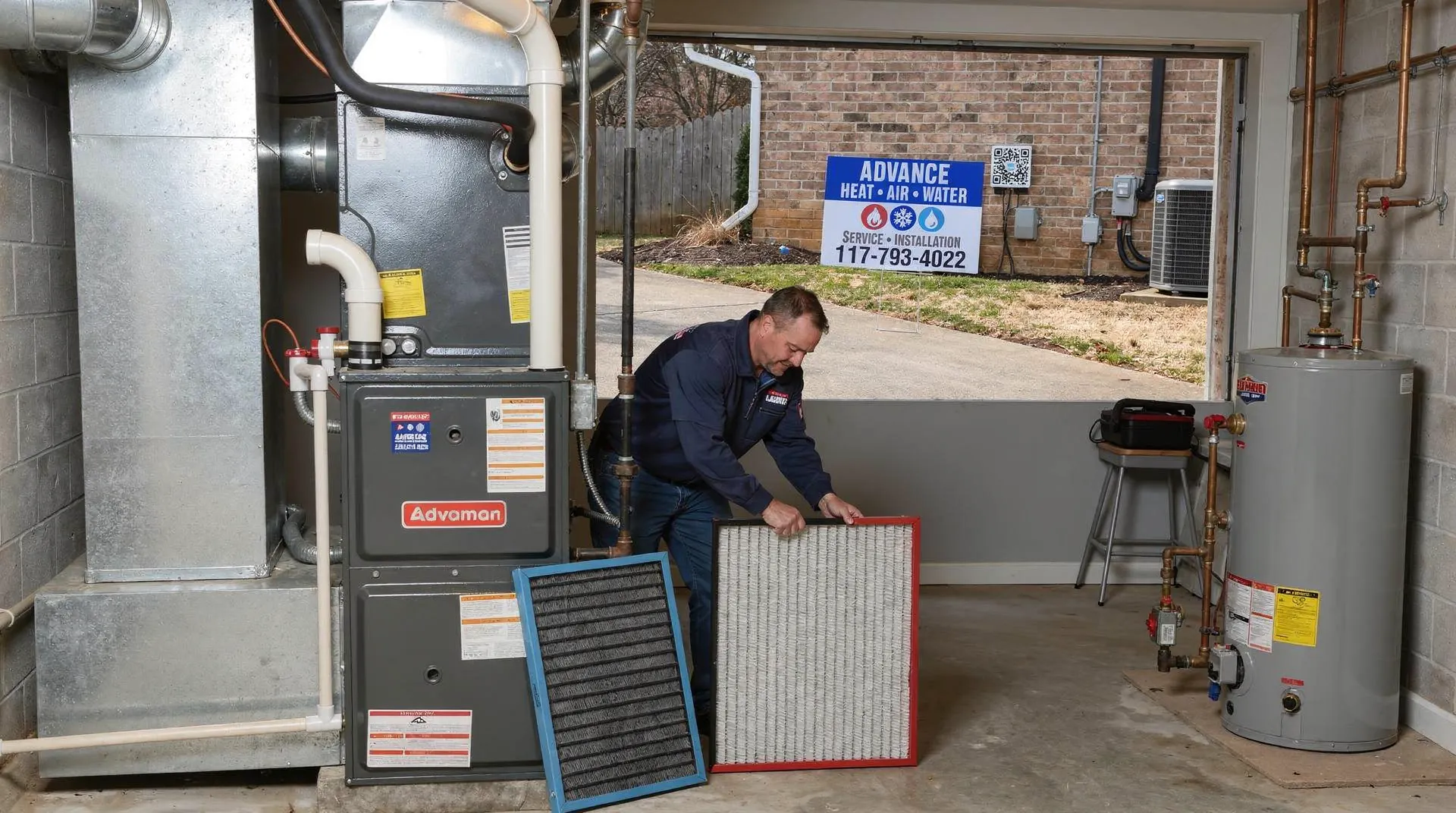
MERV stands for Minimum Efficiency Reporting Value — the industry-standard scale for measuring an HVAC air filter's effectiveness at trapping airborne particles. The American Society of Heating, Refrigerating and Air-Conditioning Engineers developed the MERV rating system to give homeowners and HVAC professionals a reliable, consistent way to compare filter performance across brands and models. At Advance HAWS, our team uses MERV ratings every day to match the right filter to each home we service in York, PA.
How Does the MERV Scale Work?
The residential MERV scale runs from 1 to 16. Higher numbers mean finer filtration — a MERV 1 filter catches only the largest debris, while a MERV 16 filter captures microscopic contaminants like pollen, pet dander, and bacteria. The rating directly reflects how effectively a filter captures particles of different sizes from the air moving through your system. Understanding this scale is the first step toward smarter furnace filter replacement decisions.
Here is a quick breakdown of the residential range:
Is a Higher MERV Rating Always Better?
Not necessarily. A filter rated too high for your system restricts airflow, forcing your furnace or air handler to work harder than it should. That added strain shortens equipment life and drives up energy use over time. Our recommendation at Advance HAWS: match the filter rating to your system's design specifications, not simply the highest number on the shelf — and when in doubt, our team is ready to assess your specific setup and recommend the right filter for lasting comfort and reliable performance.
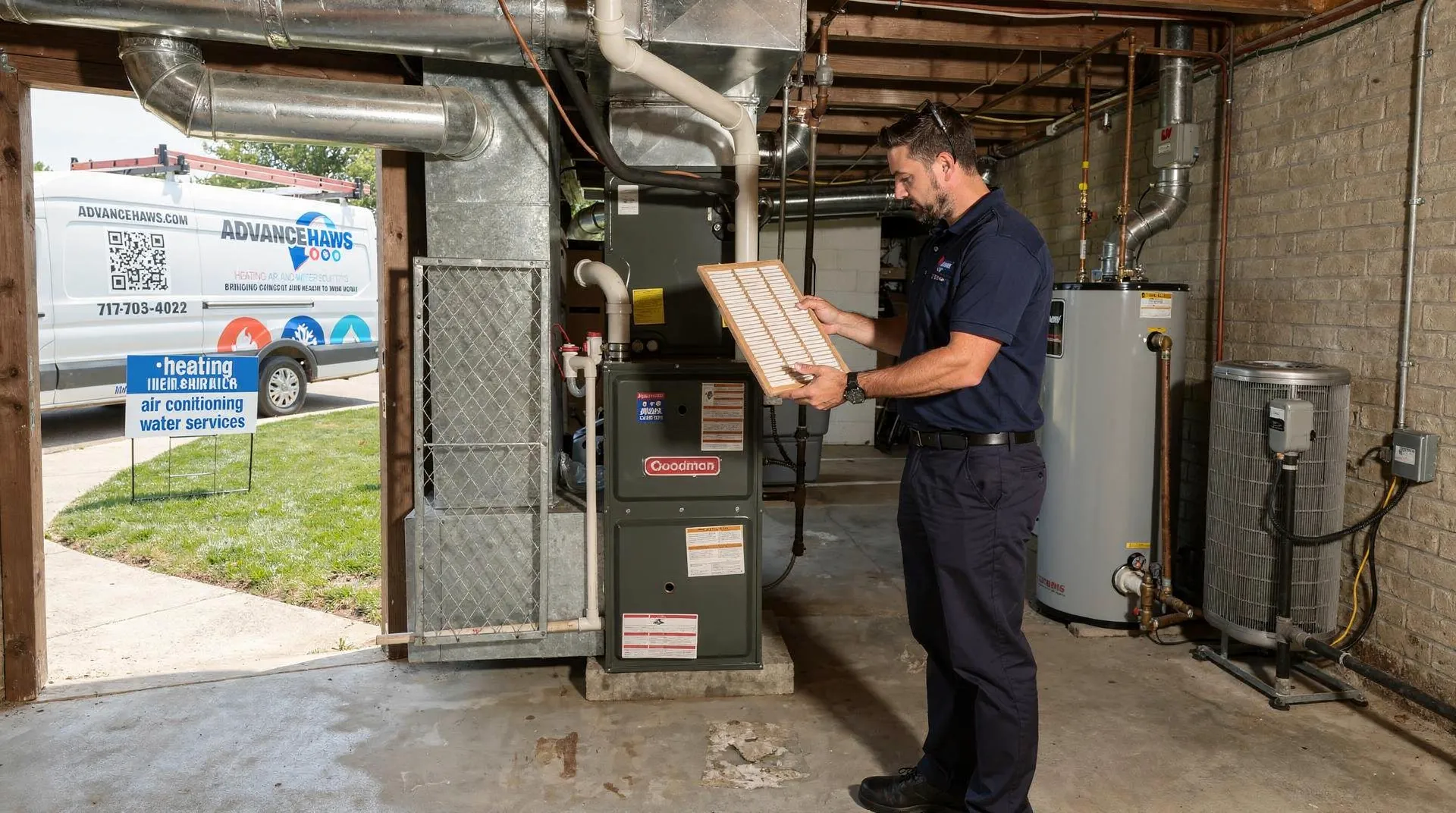
How Does the MERV Scale Break Down?
The MERV rating guide runs from 1 to 16 for residential systems, with higher numbers indicating finer filtration. Filters at the low end catch large debris, while filters at the high end trap microscopic contaminants that directly affect household health. Understanding where a filter falls on the scale helps homeowners make smarter decisions — the scale is not a simple "higher is always better" ladder but a tool for matching filtration performance to your home's specific needs. Our indoor air quality services at Advance HAWS are built on exactly this principle: clean, fresh air circulation starts with choosing the right filter for the right system.
Here is how the scale breaks down by performance tier:
Filters rated MERV 1–5 act primarily as prefilters, catching large debris before it reaches sensitive system components while offering minimal protection against fine particles that affect air quality. Think of them as a first line of defense — not a complete solution for a home with allergy sufferers or pets. Filters in the upper ranges capture smaller contaminants including pollen, pet dander, and bacteria, and that level of filtration makes a measurable difference for households where air quality is a genuine health priority.
What MERV Rating Is Best for a Residential Home?
Most homes perform well with a filter rated between MERV 8 and MERV 13, as this range balances strong particle capture with adequate airflow through the system. Restricting airflow too severely strains the equipment, reduces efficiency, and can lead to premature component failure that costs significantly more than a filter upgrade would have.
Can a High MERV Filter Damage My HVAC System?
A filter with too high a rating for your system creates excessive resistance that forces the blower to work harder, which accelerates wear and raises energy consumption. Before upgrading to a high-rated HVAC air filter, confirm the rating is compatible with your specific equipment — our team at Advance HAWS recommends consulting a qualified HVAC professional before making that change.
Which MERV Rating Is Right for Your Home?
Selecting the right MERV rating starts with matching filtration performance to what your HVAC system can actually handle. A filter that is too restrictive strains the system, reduces airflow, and drives up energy waste — the wrong choice ends up costing more than it saves over time. York, PA homeowners face a specific set of air quality challenges: humid summers, cold winters, and high spring pollen counts all place extra demand on filters and the systems behind them. A household with pets, allergy sufferers, or occupants managing respiratory conditions needs a different solution than a single-occupant home with no such concerns — and that is exactly why we at Advance HAWS build every recommendation around the individual home, its size, efficiency needs, and the health priorities of the people living there.
How do MERV ratings affect my HVAC system's performance?
Higher MERV ratings capture smaller particles, but they also create more resistance against airflow. Pushing air through a denser filter forces the system to work harder, and over time that added strain shortens equipment life and raises energy bills. The right rating delivers cleaner air without compromising system efficiency — which is the balance our team at Advance HAWS works to achieve for every client we serve in York, PA.
Use the guide below to match your household profile to the appropriate filter range:
What steps should we follow to choose the right filter?
Before selecting a filter, confirm your system's airflow specifications in the equipment manual. Following a clear process protects both your air quality and your equipment investment.
- Identify household needs — note pets, allergy history, and any occupant health conditions. These factors directly determine which filtration tier will deliver the most benefit for your home.
- Check system compatibility — verify the maximum MERV rating your equipment supports. Installing a filter beyond your system's rated capacity creates airflow restriction that shortens equipment life.
- Select a filter using the table above as a starting point. If you are unsure which tier fits your situation, our team at Advance HAWS is ready to walk you through it.
- Schedule a professional assessment — we evaluate your specific setup and recommend the right HVAC air filter for your home. Pairing the correct filter with a timely furnace filter replacement schedule keeps your system running cleanly through every season York, PA throws at it.
How Do You Read Filter Packaging and Labels?
Filter packaging carries two distinct rating systems, and confusing one for the other leads to the wrong filter choice. Understanding both systems before purchasing protects your system and your indoor air quality — and it is something our team at Advance HAWS always walks clients through when they are unsure what they are looking at on the shelf.
What Is the Difference Between MERV and FPR Ratings?
The MERV rating guide is the industry-standard measurement system used across manufacturers, distributors, and HVAC professionals nationwide. The FPR (Filter Performance Rating) is a retailer-specific system developed by The Home Depot — both systems appear on filter packaging, so knowing which label you are reading matters before you make a purchase.
How Is the FPR Score Calculated?
The Home Depot's FPR system builds a weighted average from three performance factors. Knowing how those factors break down helps you compare a store-branded filter against an industry-rated one.
- Large particle capture — accounts for 60 percent of the total FPR score, making it the dominant factor. This weighting reflects the most common filtration need in a standard residential home.
- Small particle capture — contributes 30 percent of the score, reflecting finer filtration performance. For households with allergy concerns, this portion of the score carries the most practical significance.
- Weight gain over the filter's lifetime — determines the remaining 10 percent, measuring how much debris the filter accumulates before it needs replacement. A filter that loads up quickly will need more frequent swaps to maintain airflow.
A score of 1 represents the lowest performance on the FPR scale and a score of 12 represents the highest. When our team at Advance HAWS evaluates a filter for a furnace filter replacement, we always confirm which rating system appears on the label first — a high FPR number and a high MERV number both signal stronger filtration, but the scales are not interchangeable. Selecting a filter based on the wrong system risks either under-filtering your air or restricting airflow through your HVAC air filter housing, and both outcomes reduce system efficiency and shorten equipment life.
How Do You Install Your New HVAC Air Filter?
Installing a new HVAC air filter correctly takes less than ten minutes and directly protects your system's efficiency, comfort, and long-term reliability. Skipping proper installation — or delaying furnace filter replacement — forces your heating and cooling equipment to work harder, driving up energy waste and increasing the risk of repairs that could have been avoided.
Before starting, confirm these prerequisites:
- The HVAC system is powered off at the thermostat before you begin. Working on an active system risks both personal safety and potential damage to components.
- The replacement filter matches the existing filter's dimensions exactly. Even a small size mismatch allows unfiltered air to bypass the media and circulate directly into your living space.
- Hands are clean and dry to avoid contaminating the new filter media. Oil or moisture from your hands can degrade filter performance from the very first use.
Follow these steps in order:
- Locate the filter slot. Find the return air vent or the air handler cabinet — this is where the filter sits. If you are unsure where yours is, our team at Advance HAWS can walk you through it before your next service visit.
- Remove the old filter. Slide the used filter out carefully and note the direction of the airflow arrow printed on the filter frame before discarding. That arrow tells you the correct orientation for the replacement.
- Inspect the filter housing. Wipe away any visible dust or debris from the slot edges using a dry cloth. A clean housing ensures the new filter seats properly and seals the airflow path.
- Insert the new filter. Align the airflow arrow on the new filter so it points toward the blower motor, then slide the filter firmly into place. A loose or reversed filter allows unfiltered air to pass through and reduces system efficiency.
- Secure the access panel. Close and latch the cabinet door or vent cover completely. An unsecured panel creates air leaks that undermine filtration performance.
- Restore power and verify airflow. Turn the system back on and confirm air moves freely through the vents. Weak airflow after installation may indicate a filter that is too restrictive for your system.
How Often Should a Furnace Filter Be Replaced?
Replacement frequency depends on filter type, household conditions, and system usage. Our team at Advance HAWS recommends checking filters monthly and replacing them on a schedule that keeps airflow unrestricted and indoor air quality consistent — because a clean filter is one of the simplest ways to protect a significant home investment.
Why Does Proper Filter Installation Matter for System Reliability?
A correctly seated filter prevents unfiltered air from bypassing the media entirely, which is the most common cause of premature system wear we encounter in York, PA homes. At Advance HAWS, our team uses advanced diagnostic tools and proven techniques to ensure every system runs reliably, safely, and efficiently — because doing the job right the first time is the standard we hold ourselves to.
How Often Should You Replace Your Furnace Filter?
Furnace filter replacement frequency depends on filter type, household conditions, and how hard your HVAC system works through York, PA's demanding seasonal swings. Skipping regular replacements forces your system to strain against restricted airflow — driving up energy waste and accelerating wear on critical components that are far more costly to repair than a timely filter swap.
As a general starting point, follow these replacement intervals based on filter type:
- Check the filter monthly. Hold it up to light — if the filter surface appears gray and clogged, replace it immediately regardless of schedule. A visual check takes seconds and can prevent a service call that costs considerably more.
- Replace basic 1-inch filters every 30 to 60 days. High-traffic homes with pets or allergy sufferers need the shorter interval to maintain consistent air quality. Letting these filters run past their useful life is one of the most common mistakes we see in York, PA homes.
- Replace thicker 4- to 5-inch media filters every 6 to 12 months. These filters hold more debris before airflow suffers, making them a practical choice for homeowners who want fewer replacement cycles. They still need a monthly visual check to catch any early clogging.
- Schedule a professional airflow evaluation annually. Our tune-up at Advance HAWS includes a thorough airflow assessment alongside electrical inspections, coil and blower cleaning, thermostat calibration, and personalised maintenance recommendations — so nothing gets missed and every component gets attention before a small issue becomes a larger one.
Routine HVAC air filter maintenance is one piece of a larger picture. Reliable, efficient home comfort in York, PA depends on consistent seasonal upkeep that addresses both heating and cooling demands year-round, and our team at Advance HAWS is here to support that with every visit.
What Happens If You Wait Too Long to Change Your Filter?
A clogged filter chokes airflow to the blower, forcing the system to work harder to move conditioned air through your home. Over time, restricted airflow causes overheating, premature component failure, and higher utility bills — all avoidable with a simple monthly check that takes less than a minute.
When Should You Call a Professional Instead of Just Replacing the Filter?
If a fresh filter does not resolve weak airflow, unusual noises, or inconsistent temperatures, the problem runs deeper than the filter. Our team at Advance HAWS provides round-the-clock emergency service for heating and cooling breakdowns, ensuring rapid response when urgent issues arise — reach out to us and we will diagnose the root cause fast.
What Are Common Filter Replacement Mistakes to Avoid?
Furnace filter replacement errors are among the most preventable causes of HVAC system strain and poor indoor air quality. Skipping routine swaps, choosing the wrong filter grade, or installing a filter backward all quietly degrade system performance over time. At Advance HAWS, our more than 20 years of heating and cooling experience serving York, PA has shown us the same mistakes appearing repeatedly in homes and commercial properties alike — and catching these errors early protects both comfort and equipment longevity.
Does a Higher MERV Rating Always Mean Better Performance?
A higher MERV rating number does not automatically mean a better outcome for every system. Overly high MERV ratings restrict airflow and reduce overall HVAC system efficiency, forcing the blower motor to work harder and shortening equipment life. The right approach is to match the filter grade to what the system's manufacturer actually recommends — and if you are unsure, our team at Advance HAWS is ready to help you find the right fit for your home in York, PA.
What Happens When Homeowners Forget to Replace Filters on Schedule?
A clogged HVAC air filter starves the system of airflow just as effectively as a filter that is too restrictive. Reduced airflow causes the heat exchanger or evaporator coil to work under stress, leading to breakdowns that could have been avoided entirely with a consistent replacement schedule.
The most common filter replacement mistakes we see — and how to avoid them:
- Selecting the wrong MERV rating. Check the equipment manual for the recommended range before purchasing. Installing a filter outside your system's rated range — too high or too low — affects both air quality and equipment health.
- Installing the filter backward. Confirm the airflow arrow on the filter frame points toward the blower, not away from it. A reversed filter dramatically reduces filtration efficiency and strains the blower motor unnecessarily.
- Skipping replacement intervals. Replace filters on the schedule the manufacturer specifies — do not wait until visible dirt accumulates on the surface. By the time a filter looks dirty, it has already been restricting airflow for longer than it should have.
- Ignoring system-specific needs. Commercial and residential systems have different airflow demands, and using a filter rated for the wrong application compromises both performance and reliability. Our team at Advance HAWS evaluates both residential and light commercial systems in York, PA and recommends the correct specification every time.
When a major system upgrade is needed, Advance HAWS supports financing options for installations and large replacements — making the right long-term solution accessible without delay. Understanding MERV ratings empowers you to select the right air filter for your home's specific needs and budget, and by matching filter efficiency to your HVAC system's capabilities and your household's air quality priorities, you invest in both equipment longevity and indoor comfort. The right filter choice delivers cleaner air while protecting your system — a straightforward decision that yields lasting benefits for your family's health and your home's performance.
FAQ
What does MERV stand for?
Minimum Efficiency Reporting Value is the industry-standard scale measuring how effectively an air filter traps airborne particles, developed by the American Society of Heating, Refrigerating and Air-Conditioning Engineers. At Advance HAWS, our team uses this scale every day to guide homeowners in York, PA toward the right filter for their specific system.
What range do residential MERV ratings cover?
Residential HVAC systems use filters rated from 1 to 16, with higher numbers capturing smaller contaminants including pollen, pet dander, and bacteria. Advance HAWS recommends matching your filter's rating to your system's design specifications rather than simply choosing the highest number available.
Where does Advance HAWS serve homeowners needing filter guidance?
Advance HAWS serves residential and commercial property owners in York, PA, evaluating each system individually to match the correct filter specification to the equipment. Our experienced team takes a personalised approach to every home we visit, so clients always receive a recommendation built around their specific system and household needs.
Get the Right Filter for Your Home — Let Advance HAWS Help
Choosing the right MERV-rated filter is one of the most impactful decisions you can make for your home's air quality and your HVAC system's long-term health. At Advance HAWS, our team brings more than 20 years of hands-on experience serving homeowners in York, PA — and we are ready to put that expertise to work for you. Whether you need a professional system assessment, a scheduled maintenance visit, or guidance on which filter is right for your equipment, Advance HAWS is here to help. Reach out to our team today and we will make sure your home is running cleanly, efficiently, and comfortably through every season.
Customer Testimonials
Focus on enhancing the quality of your maintenance plan by ensuring all components are well-coordinated and efficient. This will lead to improved performance and longevity of your systems.