Inverter Installation in Dallastown, PA

When you're considering a modern HVAC upgrade for your Dallastown, PA home, inverter-driven systems represent some of the most efficient and intelligent cooling and heating technology available today. Unlike traditional systems that run at full capacity or shut off completely, inverter technology allows your equipment to operate at variable speeds, adapting to your actual comfort needs throughout the day and season. This means better temperature control, lower energy bills, and a quieter home environment. If you're researching what's involved in getting an inverter system installed properly, you've come to the right place. Advance HAWS has spent over 20 years perfecting the installation process for these advanced systems, and we're ready to walk you through exactly what professional inverter installation looks like.
Inverter Installation in Dallastown, PA
When you're considering a modern HVAC upgrade for your Dallastown, PA home, inverter-driven systems represent some of the most efficient and intelligent cooling and heating technology available today. Unlike traditional systems that run at full capacity or shut off completely, inverter technology allows your equipment to operate at variable speeds, adapting to your actual comfort needs throughout the day and season. This means better temperature control, lower energy bills, and a quieter home environment. If you're researching what's involved in getting an inverter system installed properly, you've come to the right place. Advance HAWS has spent over 20 years perfecting the installation process for these advanced systems, and we're ready to walk you through exactly what professional inverter installation looks like.
Why Inverter Technology Matters for Dallastown Homes
Dallastown experiences the full spectrum of Pennsylvania's seasonal demands. Summer heat can push your AC to work overtime, while winter cold makes heating efficiency crucial for both comfort and budget. Inverter-driven systems excel in both scenarios because they match the workload to what your home actually needs. A traditional air conditioner might blast at full power for 30 minutes, then shut off entirely. An inverter system instead ramps up gradually, maintains your setpoint with precision, and scales back when the load decreases. Over the course of a season, this difference translates to 20-40% better efficiency compared to older fixed-capacity models.
Beyond efficiency, inverter technology offers something that many Dallastown homeowners value: comfort. These systems maintain steadier temperatures without the temperature swings that come with traditional on-off cycling. Your home stays comfortable without the "hunt" for the right setpoint. Combined with ductless mini-split options, inverter systems also give you the flexibility to heat or cool specific zones, which is ideal for older Dallastown homes where ductwork might be impractical or for new additions where extending traditional ducts isn't economical.
Understanding Your Inverter Installation Process
When Advance HAWS comes to your Dallastown home for an inverter installation, we follow a detailed, methodical process that ensures your system performs at peak efficiency from day one. We don't treat every installation the same way. Instead, we tailor our approach to your specific home, layout, and comfort goals. This personalized attention means you get exactly what your home needs, not a one-size-fits-all solution.
Initial Site Assessment and Load Calculations
The foundation of every quality inverter installation starts before any equipment arrives. Our technicians conduct a thorough site assessment of your Dallastown home, evaluating factors that directly impact system performance and sizing. We examine your home's square footage, insulation levels, window types and orientation, current ductwork (if applicable), and the overall layout. We also consider local factors unique to the Dallastown area - how your home's exposure to afternoon sun affects cooling needs, whether you have any energy code considerations, and how your home's age and construction might influence the installation approach.
Load calculations are the technical heart of this phase. We use industry-standard calculation methods to determine exactly how much cooling capacity your home needs on the hottest Dallastown summer day and how much heating capacity you need during winter. This isn't guesswork. Proper load calculations account for your climate zone, your home's thermal characteristics, and your actual usage patterns. Getting this right is critical because an oversized system cycles on and off too frequently, wasting energy and reducing the lifespan of your equipment. An undersized system struggles on extreme days and never quite reaches your comfort setpoint. Our calculations ensure you get the right capacity for your home.
Equipment Selection and Sizing
Once we understand your home's needs through load calculations, we work with you to select the right inverter system for your situation. Advance HAWS partners with quality manufacturers to ensure you have reliable, efficient options. We consider several factors when recommending equipment for your Dallastown home:
- Capacity Range: Selecting units sized appropriately for your calculated load, typically with a margin for flexibility
- SEER2 Rating: Modern efficiency ratings that reflect real-world performance better than older SEER ratings
- Noise Levels: Particularly important for ductless mini-splits, where the indoor unit placement affects daily comfort
- Inverter Sophistication: Some systems offer advanced features like predictive algorithms and smartphone controls
- Warranty Coverage: Understanding what's covered and for how long, giving you peace of mind
- Installation Requirements: Ensuring the system we select works well with your home's layout and electrical infrastructure
For Dallastown homes considering ductless mini-split systems, we discuss indoor unit placement carefully. Wall-mounted units need clear line-of-sight for air distribution. Ceiling cassettes work well for open-concept spaces. Floor-mounted units are discreet options for tight spaces. We help you visualize where these units will go and how they'll integrate with your home's aesthetics. With traditional split systems, we evaluate whether your existing ductwork can be reused, modified, or if new ductwork makes sense for your installation.
Electrical and Refrigerant Line Work
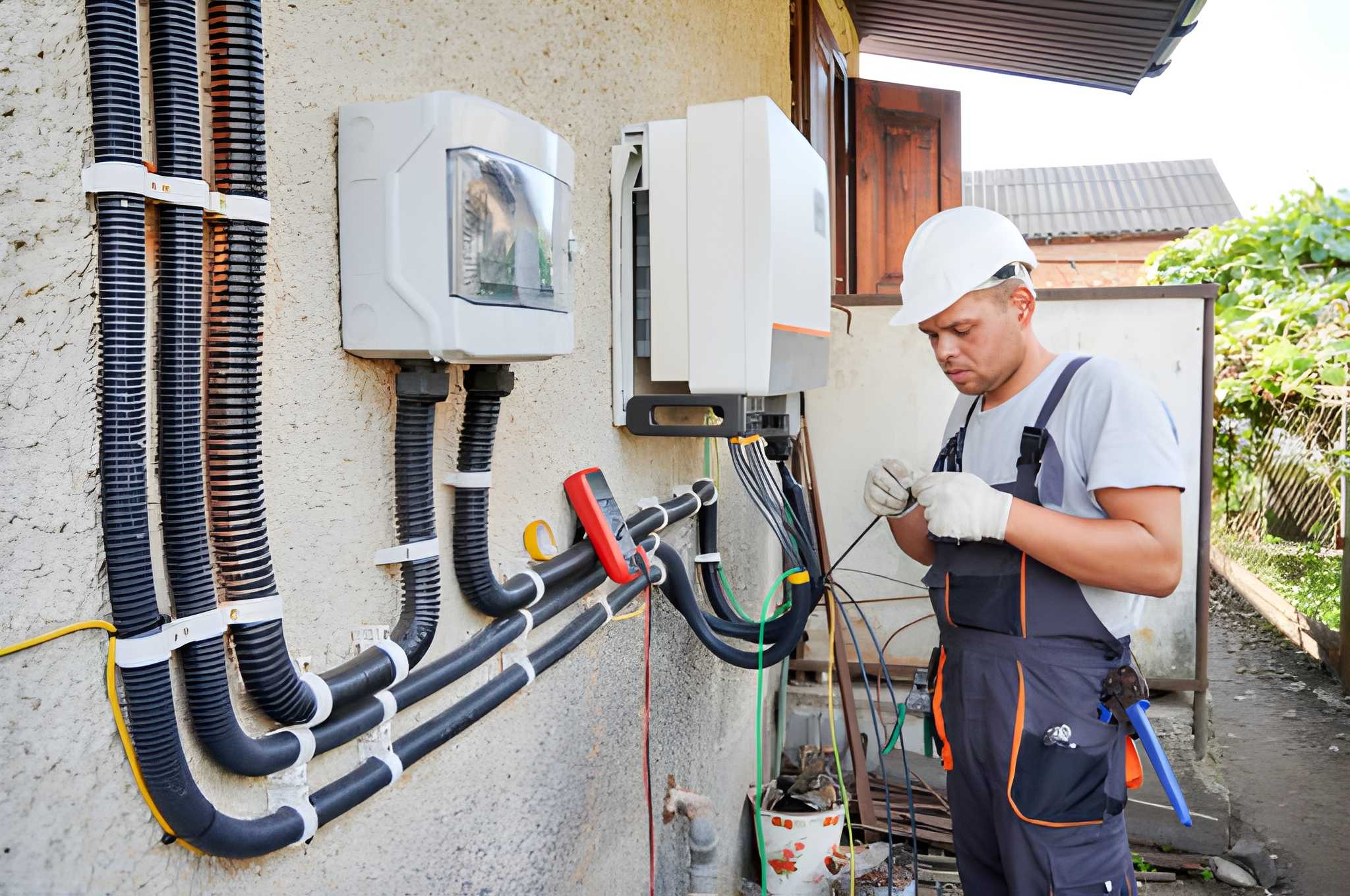
Inverter systems are more sophisticated than traditional HVAC equipment, and the electrical and refrigerant work reflects that complexity. This is where precision and code compliance become absolutely essential. Our technicians handle both elements carefully to ensure your system operates safely and efficiently for years to come.
Electrical Installation involves several critical steps:
- Disconnect and Upgrade Assessment: We evaluate your home's existing electrical service to ensure adequate capacity. Inverter systems require proper voltage and amperage. Many older Dallastown homes may need service upgrades or new circuits dedicated to the HVAC system.
- Dedicated Circuit Installation: We run a new, properly sized circuit from your electrical panel to the outdoor condensing unit (for split systems) or to the wall-mounted controller (for ductless systems). This dedicated circuit ensures the inverter equipment receives clean, consistent power.
- Breaker and Safety Equipment: Installation of appropriately sized breakers, disconnects, and surge protection. Inverter technology is sensitive to power fluctuations, so proper electrical infrastructure protects both the equipment and your home.
- Thermostat or Control Wiring: Installation of the control interface - whether that's a programmable thermostat, wireless controller, or smartphone-enabled system - with all wiring run to code.
- Voltage Verification: Before commissioning the system, our technicians verify that electrical voltage at the equipment matches specifications exactly.
Refrigerant Line Work requires specialized skills and EPA certification, both of which our team possesses. The refrigerant lines that connect your indoor and outdoor units (or connect to wall-mounted cassettes in ductless systems) must be installed with precision:
- Line Sizing: We size copper tubing appropriately for your system's capacity and the distance the refrigerant must travel. Undersized lines create pressure drop and efficiency loss. Oversized lines increase cost and complexity without benefit.
- Evacuation and Charging: Before any refrigerant enters the system, we evacuate all air and moisture from the lines using specialized vacuum equipment. Moisture inside refrigerant lines causes corrosion and equipment failure. We achieve deep vacuum levels that meet EPA standards, then introduce refrigerant using calibrated scales and precise procedures.
- Pressure Testing: After refrigerant charging, we test system pressures to verify they match specifications for your equipment under your home's load conditions. Incorrect pressures indicate problems that must be corrected before you use the system.
- Leak Detection: We perform thorough leak detection using electronic sensors and pressure monitoring to ensure every connection is absolutely tight.
- Line Insulation and Routing: All refrigerant lines receive foam insulation to minimize heat transfer and protect the system. We route lines carefully to avoid kinks, sharp bends, or unnecessary exposure that could damage the tubing.
Refrigerant line work might seem straightforward, but it's genuinely complex. Mistakes in this phase create efficiency losses, equipment damage, and potential safety issues. We take this work seriously because we know it directly affects how well your system performs for the next 10-15 years.
Professional Mounting and Installation
With electrical and refrigerant foundations in place, we move to the physical installation of your equipment. For ductless mini-split systems in Dallastown homes, this involves carefully mounting indoor units on walls or ceiling spaces, ensuring they're level, secure, and positioned for optimal air distribution. We use quality mounting brackets and ensure all fasteners are appropriate for your wall type - whether that's drywall, plaster, or masonry common in older Dallastown homes.
For traditional split systems, we install the outdoor condensing unit on a level pad or mounting structure positioned away from air return sources and obstruction. Proper placement is crucial for efficiency and longevity. The unit needs clearance for air circulation, protection from direct sun exposure during installation (to prevent high head pressure), and drainage for condensation. We ensure the concrete pad is level because an uneven condenser unit creates refrigerant distribution problems and accelerates component wear.
Indoor air handling units, whether in attics, basements, or utility closets, receive equally careful installation. We ensure proper support, level positioning, and accessibility for future maintenance. All connections - electrical, refrigerant, and condensate drain - are made to code with quality materials.
Safety, Code Compliance, and Commissioning
Before your new inverter system starts running, we complete comprehensive commissioning procedures that verify every aspect of the installation meets Pennsylvania electrical codes, EPA refrigerant handling standards, and manufacturer specifications. This commissioning phase is where Advance HAWS' commitment to quality really shows. We don't cut corners here because we know that proper commissioning ensures your system performs reliably and safely.
Our commissioning process includes:
- Electrical Verification: A final electrical inspection confirms all connections are tight, all breaker settings are correct, and voltage readings match specifications.
- Refrigerant System Check: We verify subcooling and superheat readings, which tell us whether refrigerant charge is exactly right for your system and local conditions.
- Airflow Verification: For systems with ductwork, we verify proper airflow through ducts and registers using calibrated instruments.
- Thermostat Calibration: Programming and testing your control system to ensure it accurately reads temperature and responds correctly to your setpoints.
- Safety Shutdown Testing: Confirming that all safety features - high-pressure cutouts, low-temperature protection, flame rollout protection for heating - function properly.
- Operation in All Modes: Running your system through heating, cooling, dehumidification, and any other operating modes to verify smooth, quiet operation.
- Noise Assessment: Listening for unusual sounds that might indicate installation issues and addressing them immediately.
Warranty Registration and Documentation
Once commissioning is complete, we handle warranty registration for your new equipment. Most inverter systems carry manufacturer warranties covering parts for 5-10 years, with some labor coverage available depending on your service plan. We register your equipment properly to ensure the warranty is active and documented. We also provide you with complete documentation including the serial numbers, warranty terms, and manufacturer contact information. This paperwork is important if you ever need to make a claim, and it's also valuable when you eventually sell your Dallastown home.
We give you a detailed record of the installation including equipment specifications, refrigerant charge amounts, electrical settings, and commissioning results. This documentation helps any future technician understand your system's configuration and perform maintenance correctly.
Post-Installation Testing and Homeowner Orientation
The final phase of professional inverter installation is making sure you understand how to use your new system effectively. Our technicians walk you through every feature of your setup, whether that's a programmable thermostat, wireless remote, smartphone app, or voice control integration. We explain how to set up schedules, adjust setpoints, use energy-saving modes, and access any advanced features your system offers.
We also walk you through basic maintenance. Even though inverter systems are sophisticated, you don't need to be a technician to keep them running well. We show you where the outdoor unit filter is located (if your system has one) and how often it should be checked. We explain the importance of keeping your condenser unit clear of leaves, grass clippings, and other debris, especially in the seasons when Dallastown yards shed material. For ductless systems, we show you how to clean the thin air filters on indoor units, which improves efficiency and keeps the system from having to work as hard.
We also discuss the thermostat settings that work best for your home and climate. Many Dallastown homeowners don't realize that aggressive temperature setpoints (trying to get your home to 68 degrees in July when it's 95 outside, for example) force your inverter system to run at higher capacity, using more energy. We help you find the balance between comfort and efficiency that works for your situation.
What Makes Advance HAWS Different for Your Dallastown Inverter Installation
You have choices when it comes to HVAC contractors in the Dallastown area. Some are large companies where you're just a job number. Others are so small they lack the resources or training to handle complex modern systems properly. Advance HAWS occupies a different position: we're family-owned and operated with over 20 years of combined industry experience, which means you get personalized attention and genuine expertise.
Every inverter installation we complete receives our owner's personal stamp of approval before you ever take control of your system. That's not just a marketing phrase - it means the owner reviews the work, verifies the commissioning results, and ensures your installation meets our standards. You're not just getting a job completed; you're getting a professional who genuinely cares about quality standing behind the work.
We also understand that inverter systems represent a significant investment for Dallastown homeowners. We respect that. We're transparent about what's involved, we explain the process clearly, and we work with you to make sure you feel confident in your decision. We tailor our approach to your specific needs rather than pushing a predefined service plan that might not fit your situation. Your home is unique, and your HVAC solution should be too.
Maintaining Your Inverter System After Installation
The installation is just the beginning. To keep your new inverter system running efficiently for 15-20 years, regular maintenance is essential. Advance HAWS offers maintenance programs that keep your system in peak condition. Annual inspections - ideally one before cooling season and one before heating season for Dallastown's climate - catch small issues before they become expensive problems.
During maintenance visits, our technicians check refrigerant charge and pressures, inspect electrical connections, clean or replace filters, verify proper airflow, and lubricate any moving components. We also check that your thermostat is reading temperatures accurately and that all safety features are functioning. For ductless systems, we inspect indoor unit filters and coils. This routine attention extends your system's lifespan, maintains efficiency, and prevents the kinds of emergency breakdowns that disrupt your entire home environment.
Your inverter system is an investment in years of comfortable, efficient home conditioning. Professional installation by Advance HAWS ensures that investment performs as intended, and regular maintenance keeps it performing reliably for the long term.
Customer Testimonials
Focus on enhancing the quality of your maintenance plan by ensuring all components are well-coordinated and efficient. This will lead to improved performance and longevity of your systems.