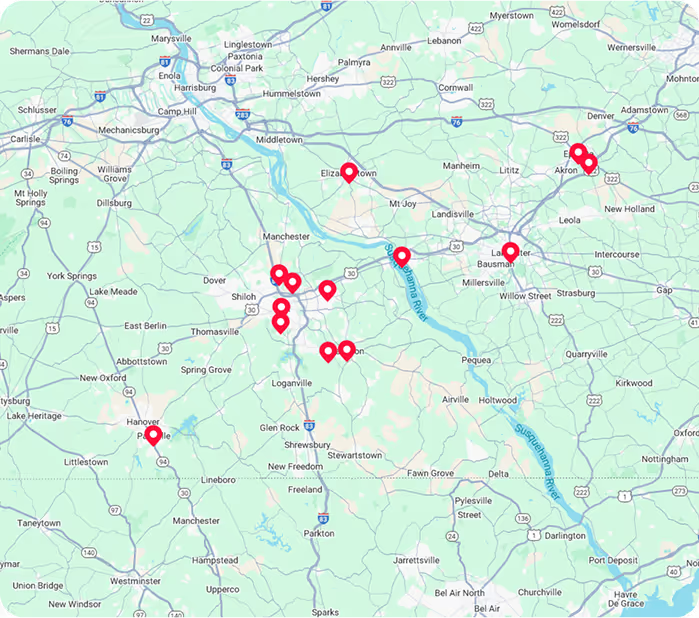
Whole House Air Filtration in Manchester, PA

In Manchester, PA, Advance Haws provides whole-house air filtration solutions designed to integrate seamlessly with your existing HVAC setup. From True HEPA and high-MERV filters to electrostatic and UV-C systems, we offer a variety of options to meet your specific needs. Proper sizing, professional installation by our experienced technicians, and ongoing maintenance are key to ensuring optimal performance, airflow, and energy efficiency. These systems effectively reduce airborne particles, allergens, and odors, making them ideal for families with pets, allergy sufferers, and homes with tight building envelopes. Advance Haws provides clear guidance on selection, expected results, and cost considerations, helping you choose a solution that balances indoor air quality, efficiency, and budget for long-term comfort and health.

Whole House Air Filtration in Manchester, PA
Cleaner indoor air is essential for homes in Manchester, PA where seasonal pollen, winter heating, and occasional agricultural dust can increase indoor particle loads. A whole house air filtration system treats the air for your entire home through the HVAC system to remove dust, pollen, pet dander, mold spores, and many bacteria and viruses. This page explains the system options, how they integrate with existing heating and cooling systems, sizing and selection criteria, professional installation steps, performance expectations, maintenance schedules, and the practical energy and cost considerations Manchester homeowners should know when choosing whole house air filtration.
Why whole house filtration matters in Manchester, PA
Manchester’s climate creates year-round indoor air challenges. Spring pollen and summer humidity increase biological allergens; fall and winter bring fine dust and combustion byproducts from heating. In older or tightly sealed homes, contaminants concentrate faster. A properly designed whole house system reduces allergens and particulates across every room, protects HVAC equipment from dust loading, and improves indoor comfort for people with allergies, asthma, or chemical sensitivities.
Whole house filtration options (what each does)
- True HEPA whole-house systems - Capture 99.97% of particles 0.3 microns in size. Best for allergy and cleanroom-level needs. Typically require a purpose-built bypass cabinet or dedicated in-duct unit to accommodate HEPA media without overloading the HVAC blower.
- High-MERV media filters (MERV 8 to MERV 16) - Media filters rated MERV 11–13 are common for residential whole-house use; they capture a wide range of particle sizes including many respiratory aerosols. MERV 14–16 approach HEPA performance for finer particles but add more pressure drop.
- Electrostatic filters - Can be passive media with electrostatic charge or active electronic purifiers. They reduce particulates effectively and some are washable. Performance varies by model and maintenance, but they can offer low operating cost when maintained.
- UV-C light modules - UV does not remove particles; it inactivates biological contaminants like mold, bacteria, and some viruses when installed at the evaporator coil or in the duct. Best combined with filtration for particle removal.
- Hybrid systems - Combine media filtration, electrostatic components, and UV for comprehensive particle capture and biological control.
Integrating with existing HVAC
Whole house systems are designed to work with forced-air HVAC. Common integration approaches:
- In-duct media cabinet mounted near the air handler.
- HEPA bypass cabinet with dedicated fan to avoid overloading HVAC blower.
- Electronic/electrostatic units installed in return ductwork.
- UV lamps mounted at the coil or in the supply plenum.
A professional evaluation checks blower capacity, duct static pressure, and available space. Upgrading to a higher-efficiency filter may require adjustments to fan settings or adding a larger filter housing to maintain airflow and efficiency.
Sizing and selection criteria
Choose a system based on:
- Home size (square footage and ceiling height) to calculate volume and required CFM.
- HVAC air handler CFM capacity and static pressure limits.
- Desired air changes per hour (ACH) — typical whole-house goals are 3 ACH for basic filtration and 4–6 ACH when occupants have moderate to severe allergies.
- Occupant health needs, pets, smoking or nearby agricultural activity that increases dust.
- Desired target contaminants (pollen, fine particulates, mold, VOCs).An installer will measure your system’s actual airflow and static pressure and recommend filter MERV rating or HEPA solution balanced with your blower capacity.
Professional installation process and timeline
- Initial on-site assessment (1–2 hours): HVAC inspection, duct layout review, and airflow measurement.
- Equipment selection and sizing: Determine filter type, cabinet size, or HEPA bypass needs.
- Installation day(s):
- Typical retrofit with media or electronic filters: 4–8 hours.
- HEPA bypass or complex duct modifications: up to 1–2 days.
- UV installations are usually 1–3 hours if space is accessible.
- Commissioning and testing (30–60 minutes): Measure airflow, check static pressure, and confirm no adverse effects on heating or cooling performance. Technician will review maintenance requirements and schedules.
Performance metrics you can expect
- MERV ratings explained: MERV 8 captures most large particles (pollen, dust mites); MERV 11–13 markedly reduces smaller particles including some respiratory aerosols; MERV 14–16 approaches HEPA for fine particles but increases pressure drop.
- HEPA performance: True HEPA removes about 99.97% of 0.3 micron particles when installed in an appropriately designed whole-house application.
- Expected particle reduction: Typical high-MERV whole-house systems reduce airborne particulates by 60–85% for targeted particle sizes inside a conditioned space; HEPA systems can achieve 95–99% reduction for fine particulates. Exact results depend on ACH, system sealing, and maintenance.
- UV effectiveness: UV does not remove particles but can inactivate a high percentage of viable mold and bacterial growth on coils and moving air when properly sized and positioned.
Filter replacement and maintenance
- Disposable high-MERV media: Replace every 6–12 months under normal residential conditions; replace more often in homes with pets or high dust loads.
- HEPA modules: Typically inspected annually; replacement frequency varies by manufacturer (often 1–3 years depending on loading).
- Electrostatic washable elements: Clean monthly to quarterly depending on loading; follow manufacturer's cleaning guidance to maintain performance.
- UV-C lamps: Replace bulbs every 9–12 months for reliable output; quartz sleeves should be cleaned annually.
- Regular HVAC maintenance (coil cleaning, proper drainage, and blower checks) improves filtration performance and extends equipment life.
Energy and cost considerations
Higher-efficiency filters add resistance to airflow (pressure drop). Effects and considerations:
- Increased fan energy: Depending on system and filter, fan energy may increase modestly; with compatible variable-speed blowers the impact can be minimized.
- HVAC longevity: Cleaner air reduces coil and duct contamination, often lowering maintenance costs and preserving system efficiency.
- Upfront vs long-term costs: HEPA and high-MERV systems have higher upfront costs but can reduce health-related expenses and decrease cleaning or maintenance needs over time.
- Warranties and financing: Manufacturer warranties commonly range from 1 to 10 years on components; UV bulbs and washable modules carry shorter warranties. Many contractors and manufacturers offer financing options or payment plans to spread upfront costs.
Expected outcomes and long-term benefits
After proper selection and installation, Manchester homeowners typically see:
- Noticeable reduction in dust accumulation on surfaces and cleaner HVAC coils.
- Fewer allergy symptoms and improved indoor comfort during pollen season.
- Longer intervals between deep duct or coil cleanings.
- Better protection for sensitive occupants such as children, elderly, and allergy sufferers.
Proper whole house filtration in Manchester, PA is a technical decision that balances filtration efficiency, HVAC compatibility, maintenance commitment, and energy impact. A professional assessment that measures airflow, static pressure, and local indoor air needs will identify the right combination of high-MERV media, HEPA, electrostatic, and UV options to deliver measurable improvement in indoor air quality for your home.
Customer Testimonials
Focus on enhancing the quality of your maintenance plan by ensuring all components are well-coordinated and efficient. This will lead to improved performance and longevity of your systems.