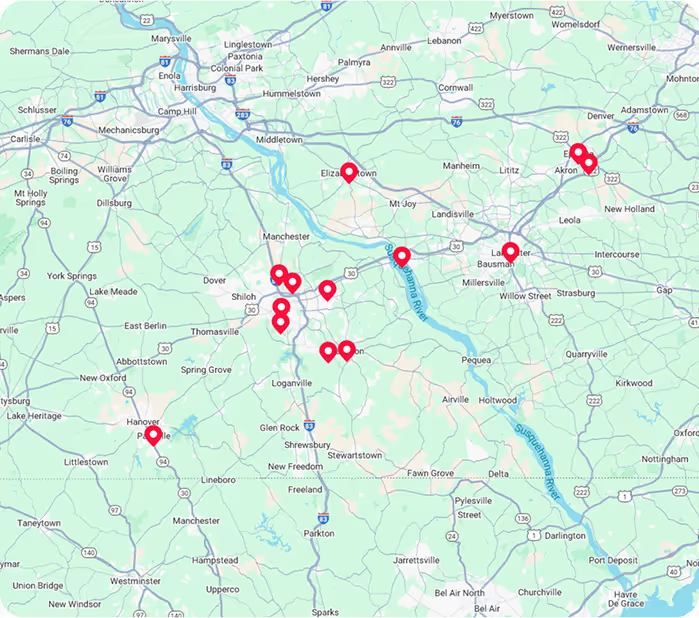
Indoor Air Quality in Spry, PA

Advance Haws offers indoor air quality services in Spry, PA, helping homeowners manage seasonal pollen, humidity, and VOCs that impact health and comfort. Our services address common issues such as dust, pet dander, mold, radon, and poor ventilation, using on-site testing methods like particle counts, VOC screening, humidity mapping, and mold sampling. Remediation strategies include upgraded filtration systems, enhanced ventilation solutions, moisture control measures, and professional mold removal. The process covers project planning, installation, maintenance, and adherence to recognized standards to ensure safe, effective, and lasting indoor air quality improvements in residential settings.

Indoor Air Quality in Spry, PA
Indoor air quality in Spry, PA matters year-round. Homes in the Susquehanna Township area face seasonal pollen, humid summers that promote mold growth, and cold winters that drive indoor heating and dry air. If your household is experiencing allergies, persistent odors, unexplained respiratory irritation, or visible mold, a comprehensive IAQ assessment can identify causes and deliver long-term solutions that improve health, comfort, and property durability.
Common indoor air quality issues in Spry, PA homes
Spry residents commonly encounter the following IAQ problems:
- Particulate pollution - dust, pet dander, and fine particles from road dust and nearby construction.
- Pollen and outdoor allergens - heavy in spring and early summer, infiltrating homes through ventilation and windows.
- High indoor humidity and mold - basements and older homes with limited ventilation are prone to mold colonization during humid months.
- Volatile organic compounds (VOCs) - off-gassing from new building materials, paints, cleaning products, and home furnishings.
- Combustion byproducts - carbon monoxide and nitrogen dioxide from poorly vented furnaces, fireplaces, and gas appliances.
- Radon - Pennsylvania has elevated radon potential; radon testing is often included or recommended as part of a full IAQ evaluation.
- Poor ventilation and HVAC-related issues - clogged filters, dirty ducts, or undersized systems that circulate contaminants or fail to control humidity.
On-site testing and diagnostic assessment
A thorough IAQ service in Spry begins with a diagnostic approach tailored to your home and concerns:
- Visual inspection of living spaces, attic, crawlspace/basement, and HVAC system.
- Particle counts for PM2.5 and PM10 to quantify particulate levels.
- VOC screening to detect common off-gassing chemicals.
- Relative humidity and temperature mapping to find moisture risk areas.
- Mold sampling (air and surface) when mold presence or health symptoms indicate a suspect source.
- Combustion gas and CO testing around appliances and vents.
- Optional radon testing when local geology or test results suggest risk.The diagnostic phase identifies pollutant sources and exposure pathways so remediation targets the root causes, not just symptoms.
Remediation strategies that work in this climate
Remediation in Spry focuses on source control, filtration, ventilation, and moisture management:
- Filtration upgrades - high-efficiency filters in HVAC systems (MERV-rated appropriate to the system) and portable HEPA units for problem rooms reduce particulates and allergens.
- Ventilation improvements - balanced mechanical ventilation or energy-recovery ventilators (ERVs) to bring in fresh air while minimizing energy loss during extreme seasons.
- Humidity control - whole-house dehumidification or humidification to maintain recommended indoor relative humidity (generally 30-50%) to inhibit mold growth and reduce dry-air discomfort in winter.
- Mold remediation - localized removal, drying, and repairs following industry-standard procedures to prevent recurrence; containment and HEPA filtration during remediation reduce cross-contamination.
- Source elimination - removal or replacement of high-VOC materials, sealing of crawlspaces and foundation gaps, and correction of plumbing leaks or drainage issues that drive moisture.
- HVAC cleaning and repair - duct cleaning per NADCA guidance, sealing duct leaks, and ensuring combustion appliances vent correctly.
Typical project process
Indoor air quality projects follow a clear, step-by-step flow to ensure measurable improvement:
- Initial inspection and health-symptom review to prioritize concerns.
- Targeted on-site testing across areas of concern (airborne particulates, VOCs, humidity, mold, combustion gases, radon when applicable).
- Diagnostic report summarizing findings, pollutant sources, and exposure risk.
- Remediation proposal outlining recommended solutions, scope of work, and expected outcomes - including any ventilation or HVAC changes, filtration upgrades, moisture control, or mold remediation.
- Implementation - defined work plan with containment, removal, installation, and verification activities.
- Follow-up testing to confirm contaminant reduction and system performance.
Maintenance plans and ongoing monitoring
Maintaining healthy indoor air in Spry homes often requires ongoing care:
- Seasonal HVAC filter replacement schedules and system tune-ups to maintain filtration efficiency.
- Periodic humidity checks during summer and winter.
- Annual or biannual duct inspections and cleaning when occupants have allergies or respiratory conditions.
- Regular radon retesting after significant home changes or mitigation measures.Planned maintenance preserves IAQ gains and extends equipment life.
Certifications and standards followed
Reliable IAQ work adheres to recognized industry standards and best practices:
- EPA guidance on indoor air quality and mold prevention.
- ASHRAE standards for ventilation (for example ASHRAE 62.1 principles).
- IICRC S520 for professional mold remediation protocols.
- NADCA recommendations for HVAC system and duct cleaning.
- Local building code compliance and safe handling of materials during remediation.Following these standards ensures work is effective, safe, and defensible from a liability and health perspective.
Health and comfort benefits you can expect
Addressing IAQ in Spry homes delivers measurable benefits:
- Reduced allergy and asthma symptoms from lower allergen and particulate loads.
- Fewer odor complaints and less noticeable mustiness from mold or excess moisture.
- Improved sleep and comfort due to stabilized humidity and cleaner air.
- Lower risk of long-term moisture-related property damage and mold recurrence.
- Better indoor environmental quality for sensitive occupants including children, seniors, and people with respiratory conditions.
Frequently asked questions
Q: How long does a typical IAQ assessment take?
A: Most assessments take 1 to 3 hours depending on home size and the number of tests performed; extended diagnostics for radon or time-integrated VOC sampling may take longer.
Q: Will mold remediation require removing building materials?
A: It depends on contamination extent. Surface mold can often be cleaned; porous materials with deep colonization typically need removal and replacement to fully resolve the issue.
Q: Are HEPA filters safe for any HVAC system?
A: Not always. High-efficiency filters can restrict airflow if the system is not designed for them. A proper evaluation ensures the correct filter rating or recommends alternative solutions like standalone HEPA units.
Q: Should I test for radon as part of IAQ testing in Spry, PA?
A: Yes. Pennsylvania has elevated radon potential in many areas. Radon testing is a recommended component of a comprehensive IAQ plan when geological indicators or occupant risk justify it.
Q: How quickly will I see health improvements after remediation?
A: Some occupants report symptom relief within days after contaminants are reduced; full benefits may continue to improve over weeks as the environment stabilizes and follow-up testing confirms reductions.
Prevention tips and long-term value
- Control indoor humidity and address leaks promptly to prevent mold growth.
- Use low-VOC paints and materials during renovations.
- Change HVAC filters on a schedule matched to your household and system needs.
- Keep combustion appliances well maintained and vented.
- Monitor seasonal allergen ingress by using filtration and timed ventilation. Investing in IAQ improvements protects health, reduces long-term maintenance costs, and increases the resilience of homes in Spry against the region's seasonal air challenges.
Customer Testimonials
Focus on enhancing the quality of your maintenance plan by ensuring all components are well-coordinated and efficient. This will lead to improved performance and longevity of your systems.