

Heat pump repair & maintenance in York, PA — expert help for steady, efficient comfort
Heat pumps move warmth between your home and the outdoors to heat and cool efficiently. Regular repair and maintenance keep that system running reliably and cost-effectively through York, PA’s changing seasons. This guide walks you through the most common heat pump failures, how to spot warning signs early, and practical steps you can take to restore comfort while keeping energy costs under control. You’ll get quick troubleshooting checks, seasonal maintenance priorities, and an overview of the professional diagnostic process so repairs are done right — not just patched. We tailor the advice to York-area realities like cold-weather performance, short-cycling, and refrigerant issues, and we give clear next steps for urgent situations. Sections include symptom checklists, how technicians diagnose and fix problems, homeowner maintenance tasks, seasonal priorities, and the cost factors that affect repair and upkeep. Read on to spot problems early, try safe DIY checks, and know when to call certified technicians — available for 24/7 emergency response.
What are the most common heat pump problems in York, PA?
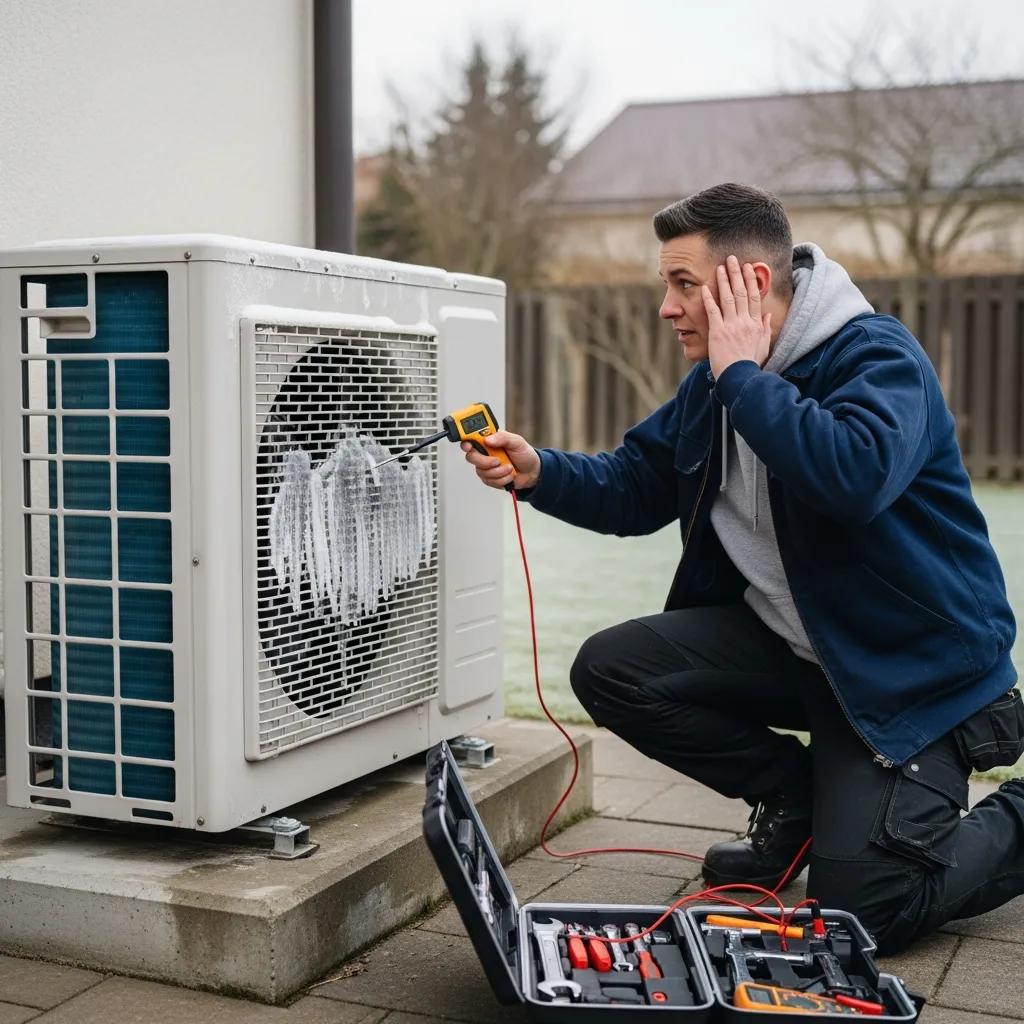
A few failure modes account for most comfort complaints we see in York homes: no heating or cooling, frequent on/off cycling, ice on the outdoor unit, strange noises, refrigerant loss, and electrical faults. Heat pumps need correct airflow, the right refrigerant charge, and reliable electrical controls to move heat efficiently — when any link in that chain breaks down, performance and energy use suffer. Below are the top problems homeowners encounter and the immediate steps you can take to reduce risk before a technician arrives. Knowing these common issues helps you respond quickly and avoids small problems turning into major repairs.
Homeowners in York should watch for these top issues:
- No heat / no cooling: The system runs but the indoor temperature doesn’t change.
- Frequent cycling (short-cycling): The unit turns on and off quickly, which raises energy bills.
- Ice buildup on the outdoor unit: Frozen coils cut heat transfer and can strain the compressor.
Those three symptoms often point to deeper problems that usually need professional diagnosis. Spotting them early gets you faster, less expensive repairs than letting issues compound.
How to identify signs of heat pump failure and inefficiency
Catching trouble early comes down to a few simple, observable signs tied to mechanical or control faults. Look for reduced airflow, higher-than-normal energy bills, rooms that don’t reach set temperatures, rattling or buzzing sounds, and visible ice or frost on the outdoor coil. Try quick checks first: confirm the thermostat mode and schedule, inspect filters for heavy dust, and scan the outdoor unit for debris or obstructions. These basic steps can fix simple problems or make it clear a technician is required. If symptoms continue after your checks — especially ice on coils or electrical smells — schedule a professional diagnostic right away to protect the compressor and avoid bigger repair bills.
What causes a heat pump to stop heating or cooling?
When a heat pump fails to heat or cool, technicians typically narrow the cause to a short list: low refrigerant charge, a failed compressor, a malfunctioning reversing valve, restricted airflow from dirty filters or blocked ducts, thermostat errors, or electrical supply problems. Each issue leaves specific clues — for example, low refrigerant often causes ice on the coils and reduced capacity, while electrical faults may show as tripped breakers or no power to the outdoor unit. Check breakers and filters first, but don’t handle refrigerant or internal electrical work yourself; those repairs require certified technicians for safety and code compliance. If simple checks don’t restore function, call for emergency repair to protect your system and keep your home safe and comfortable.
| Problem | Symptom | Immediate Action |
|---|---|---|
| Refrigerant leak | Reduced heating/cooling, ice on coils | Turn system off and call a professional |
| Blocked airflow | Weak airflow, uneven room temperatures | Replace or clean the filter and clear vents |
| Electrical fault | Unit won’t start, tripped breakers | Check the circuit breaker; don’t open wiring — call a tech |
How does Advance HAWS provide expert heat pump repair in York, PA?
Advance HAWS is a family-run, locally owned HVAC contractor serving York, Lancaster, and Dauphin counties. We offer 24/7 emergency support and full-service heat pump care. Our process starts with an on-site inspection and system-level diagnostics to find the root cause instead of applying temporary fixes. Technicians run targeted tests — electrical checks, refrigerant diagnostics, and airflow measurements — before recommending repairs or replacements, and we take time to explain findings so you understand your options. For urgent no-heat or safety issues, Advance HAWS provides a rapid-response approach to stabilize the system and schedule complete repairs quickly, helping your household regain safe, efficient comfort.
| Service | What’s included | Benefit |
|---|---|---|
| Emergency repair response | Rapid assessment and safety mitigation | Minimizes downtime and reduces property risk |
| Diagnostic visit | Electrical, refrigerant, and airflow testing | Finds the true root cause |
| Maintenance tune-up | Coil cleaning, filter check, system calibration | Restores efficiency and prevents failures |
What heat pump repair services are available for emergencies?
Emergency service addresses situations that threaten comfort or safety: complete loss of heat during cold weather, major component failures like a failed compressor, suspected refrigerant leaks, and electrical hazards. First-response actions include securing electrical safety, isolating leaks, providing temporary heating if needed, and prioritizing parts or repairs required to restore safe operation. Advance HAWS focuses on rapid mitigation in emergencies to reduce the risk of frozen pipes or further damage while scheduling full repairs without delay. If you have a no-heat emergency, clear any obvious obstructions and be ready to share system details with the technician to speed triage and restoration.
How do certified technicians diagnose and fix heat pump issues?
Certified technicians follow a methodical diagnostic sequence: review system history and symptoms, perform electrical safety checks, measure airflow and static pressure, test refrigerant pressures and temperatures, and inspect mechanical parts like compressors and reversing valves. Common repairs include replacing failed capacitors or contactors, repairing or recovering refrigerant followed by a proper recharge and leak repair, clearing blocked coils, and replacing failed compressors or reversing valves when necessary. Quality repairs restore system balance — correct refrigerant charge, proper airflow, and stable electrical control — which improves efficiency and reduces repeat service. Trusted technicians also document the work and recommend preventive steps to extend system life.
What are the best heat pump maintenance tips to improve efficiency and longevity?
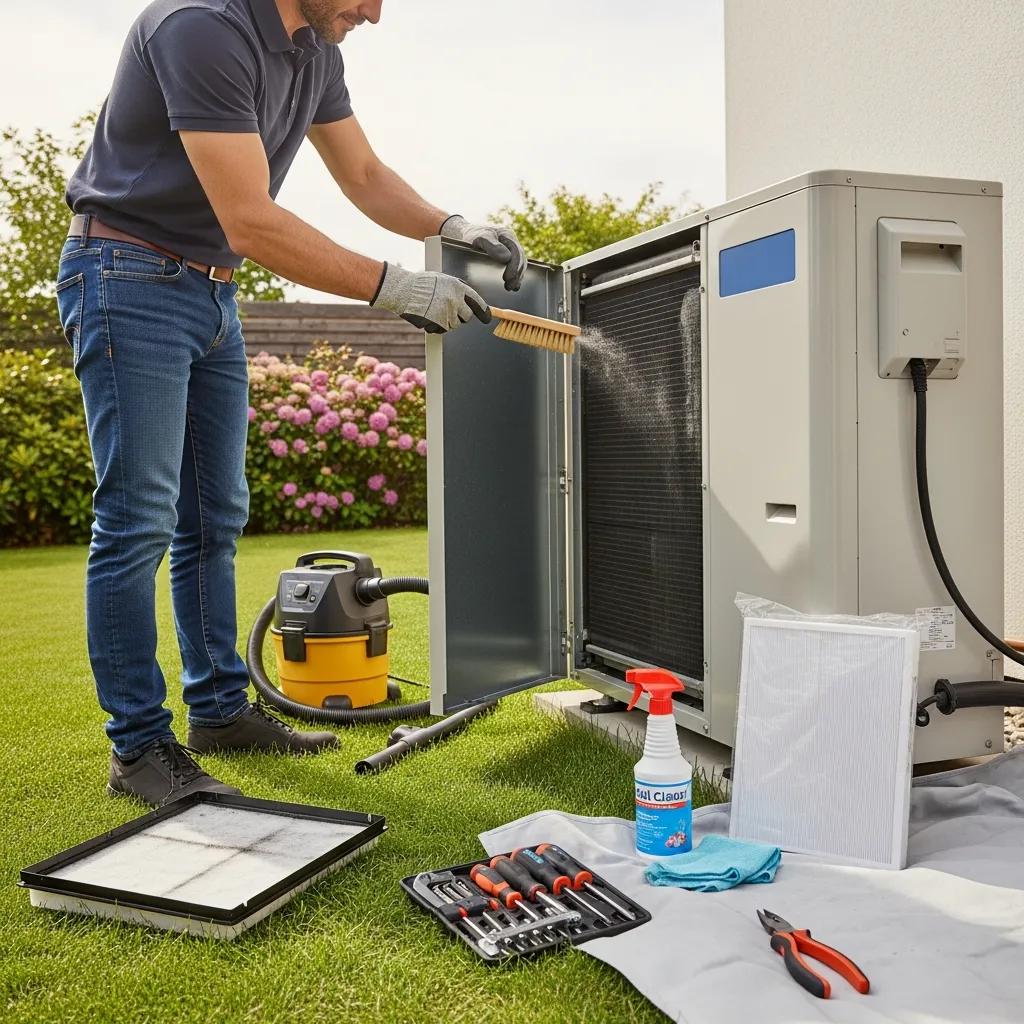
Routine maintenance preserves efficiency, lowers energy bills, and reduces the chance of sudden breakdowns by keeping key subsystems in balance. Seasonal tasks focus on airflow, clean heat-exchange surfaces, correct refrigerant levels, and calibrated controls so the heat pump runs within manufacturer specs and expected SEER/HSPF ranges. Homeowners who follow a short checklist reduce risk between professional tune-ups and often notice immediate comfort improvements. Below are practical tasks to perform and schedule.
Basic homeowner maintenance checklist:
- Change or clean filters monthly during heavy use to maintain airflow and indoor air quality.
- Keep the outdoor unit clear of leaves, snow, and vegetation so airflow and heat transfer aren’t restricted.
- Check thermostat settings and batteries to ensure correct system sequencing and avoid unnecessary cycling.
Regular homeowner upkeep reduces stress on components and increases the time between major repairs, while professional tune-ups catch issues you shouldn’t attempt yourself.
Which seasonal maintenance tasks help prevent costly repairs?
Seasonal preparation targets failure modes tied to York’s climate: fall and winter checks focus on defrost cycles and reversing valve operation, while spring and summer work emphasizes condenser coil cleaning and cooling performance. A fall tune-up should verify defrost timing, inspect refrigerant charge, and check insulation on exposed refrigerant lines to prevent heat loss. A spring visit should include cleaning and straightening condenser fins, testing cooling capacity, and confirming thermostat control for the cooling season. Scheduling these services before peak demand reduces the risk of emergency repairs and keeps the system running efficiently.
How can homeowners perform basic heat pump troubleshooting and care?
Safe DIY checks narrow down simple causes and help technicians diagnose problems faster and at lower cost. Verify thermostat mode and setpoints, inspect and replace filters, check the circuit breaker for tripped switches, and clear debris around the outdoor unit — these steps resolve many common complaints. Don’t handle refrigerant, open electrical panels, or attempt compressor repairs; those tasks require certified technicians for safety and code compliance. If DIY checks don’t fix the issue, document symptoms and any recent changes to share with the technician and speed up diagnosis.
How much does heat pump repair and maintenance cost in York, PA?
Repair and maintenance costs vary by several clear factors rather than a single flat price. Knowing those drivers helps homeowners set realistic expectations and choose the most cost-effective path. Key drivers include the type and availability of replacement parts, how complex and time-consuming the diagnostics and repairs are, the system’s age and refrigerant compatibility, and whether after-hours emergency service is required. Preventive maintenance lowers lifetime cost by catching small problems before they become major component failures, and service plans can make budgeting easier and secure priority visits during busy seasons. Below is a brief breakdown of cost factors and their typical impact.
| Factor | How it affects cost | Typical impact |
|---|---|---|
| Part type & availability | Rare or large components increase parts costs | High |
| System age & compatibility | Older systems may need retrofits or refrigerant upgrades | Medium–High |
| Labor & access difficulty | Tight or hard-to-reach installations raise labor hours | Medium |
| Emergency or after-hours service | Urgent calls typically incur premium rates | Medium–High |
Knowing these factors helps with budgeting. For a precise estimate that fits your specific heat pump, it’s best to request a quote from a certified provider.
What factors influence the cost of heat pump services?
Parts, labor hours, system age, refrigerant type, and diagnostic complexity are the main cost drivers — each affects the scope and time needed. For example, replacing a compressor or reversing valve involves costly parts plus extended labor and system recovery, while cleaning coils and recalibrating controls is lower cost but delivers meaningful efficiency gains. Long-term costs fall when homeowners keep up with routine maintenance, fix small leaks early, and choose timely repairs rather than deferring work that can compound damage. Accurate diagnosis up front is the best way to avoid unnecessary repeat visits.
Are there financing or service plans available for heat pump maintenance?
Many providers offer service plans and financing to spread costs and ensure regular maintenance. These programs typically include scheduled tune-ups, priority scheduling, and discounts on parts or labor. Service plans help homeowners avoid surprise bills, keep warranties valid, and find issues before they turn into expensive failures. Advance HAWS offers repair support and maintenance plans as part of our local services — members get priority response and tailored recommendations to extend equipment life. Request a quote or schedule a maintenance visit to see plan options and find the right coverage for your budget.
- Priority scheduling: Plans often get faster response during peak seasons.
- Discounted repairs: Members commonly receive reduced labor or parts pricing.
- Planned maintenance: Regular visits prevent major breakdowns and smooth annual costs.
These benefits show why preventive service usually lowers total ownership cost over a heat pump’s life.
Conclusion
Keeping your heat pump serviced and repaired by experienced technicians is the best way to ensure reliable comfort and energy efficiency in your York, PA home. Learn the common signs, perform safe DIY checks, and schedule professional diagnostics when needed to avoid costly failures. For tailored solutions and peace of mind, consider booking a diagnostic visit with our certified team and explore our maintenance plans to keep your home comfortable year-round.